
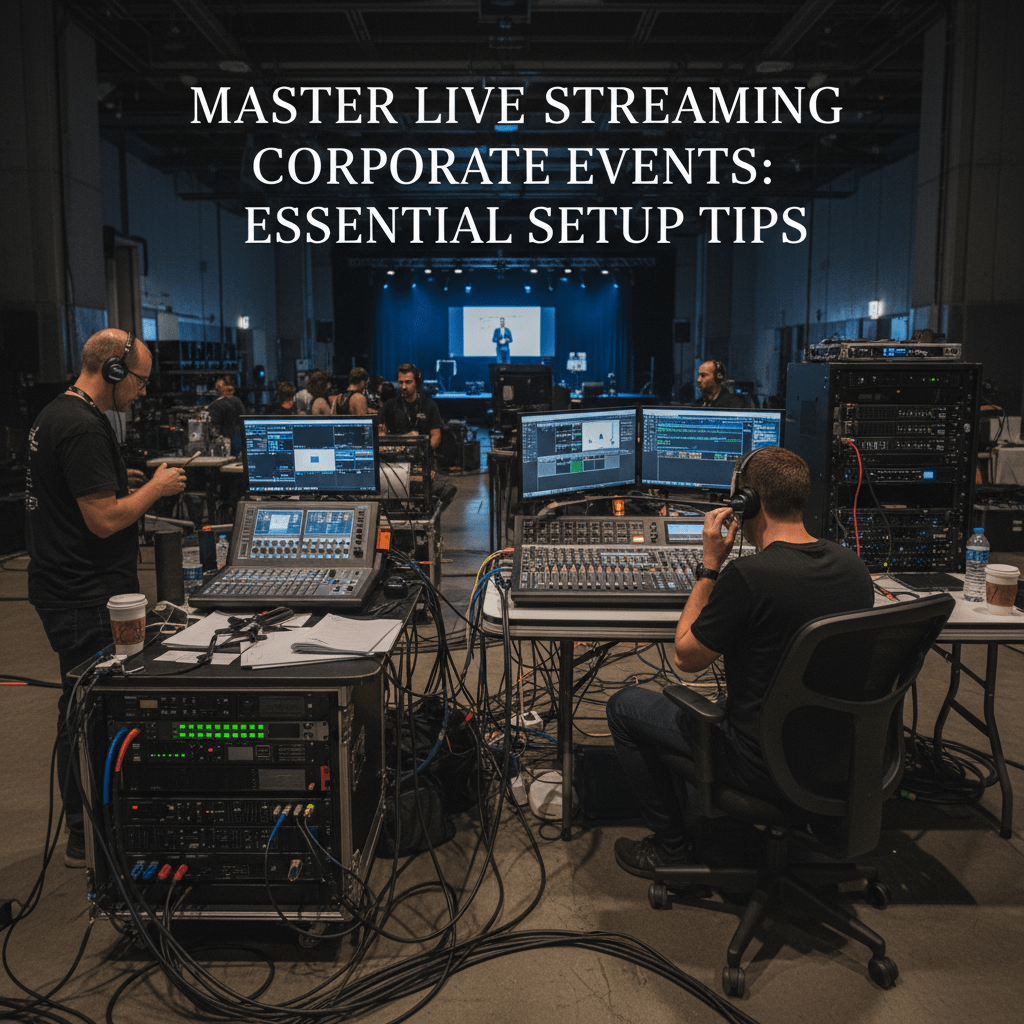
Live streaming corporate events: the future of real-time broadcasting
Introduction
Live streaming corporate events is no longer a luxury—it’s a necessity for modern businesses in California, the Bay Area, and across the nation. Real-time broadcasting allows companies to connect with employees, partners, and customers wherever they are, removing the barriers of geography and time. A well-planned event streaming setup doesn’t just show your message to more people—it turns every viewer into a participant.
In this post, we’ll explore why live streaming corporate events matter, the undeniable benefits for businesses, and how to get started with the right real-time broadcasting tools. We’ll share facts, case studies, and practical advice, all in simple, direct language—so you can put these insights into action the same day you read them.
1. Understanding live streaming corporate events
Definition and importance
Live streaming for corporate events means broadcasting your company’s presentations, meetings, and gatherings in real time over the internet. This technology allows people anywhere—from San Francisco to Shanghai—to watch, listen, and interact as if they were in the room. The difference between a standard video conference and a true event streaming setup is the scale, quality, and professional touch only live streaming can deliver.
Why does it matter?
Every company needs to communicate—with its team, its investors, and its clients. But getting everyone in one place is expensive, impractical, and often impossible. Live streaming corporate events lets you reach your whole world at once, not just the people who can afford to fly in. And in the Bay Area, where innovation never stops, leading organizations are already using real-time broadcasting to connect with global partners, investors, and customers.
Key facts and statistics
- The global enterprise video market is booming, projected to reach $25.6 billion by 2025.
- 71% of event planners will keep offering hybrid (in-person and online) events even as physical gatherings return.
Case studies
Bay Area tech giants and nimble startups alike use live streaming for everything from employee town halls to global product launches. One leading firm in San Jose streamed its annual meeting to a global audience of investors, saving thousands in travel costs and making sure no shareholder missed out. These stories are becoming common—because live streaming works.
Expert insights
“Live streaming has democratized access to corporate events,” says a Silicon Valley business leader. “It lets small companies and global enterprises share their stories with millions, not just those who can afford a plane ticket.”
Practical recommendations
To reach the right people, choose a platform that offers high-quality video, reliable delivery, and interactive features. Whether you’re streaming from a boardroom in Oakland or a campus in Sunnyvale, quality and reach are your new benchmarks.
2. Benefits of live streaming corporate events
Increased audience engagement
Live streaming corporate events bring people together in real time, no matter where they are. Viewers can ask questions, respond to polls, and join discussions as things unfold—just like in a live meeting, but with the whole world able to join in.
Key facts and statistics
- Interactive features—like live polls, Q&A, and chat—boost engagement and keep audiences active.
- Over a quarter of internet users watch live streams weekly, showing the hunger for real-time experiences.
Case studies
Take a Bay Area software startup that live-streamed its latest product reveal. More than 5,000 people from 30 countries watched, asked questions, and gave feedback—something physically impossible at a hotel ballroom in Palo Alto or Mountain View.
Expert insights
“Real-time engagement is key to building a loyal audience,” says a media expert. “When viewers can speak up, they feel heard. That’s the power of live streaming corporate events.”
Practical recommendations
Use platforms with built-in chat and polling. Encourage your team to monitor questions and respond live. Consider tools like Zoom, YouTube Live, or Vimeo Livestream for events of any size.
Cost-effectiveness
Live streaming turns the financial logic of corporate events upside down. Forget booking expensive venues, arranging caterers, or paying for flights and hotels. With a solid event streaming setup, you can run a global conference for the cost of a single plane ticket.
Key facts and statistics
- Streaming cuts travel, venue, and catering costs dramatically—often by 90% or more.
- Virtual events offer better ROI because overhead is lower.
Case studies
A San Francisco biotech company hosted a three-day virtual conference for 1,000 people from 22 countries, at a fraction of the price of a single-day in-person event in the city.
Expert insights
“One of the most overlooked benefits of live streaming is its cost-effectiveness,” says a financial analyst. “Small investments in streaming equipment save big money on logistics.”
Practical recommendations
For small meetings, use Zoom or Google Meet. For bigger events, consider professional platforms like Dacast or Vimeo Livestream. Don’t skimp on quality.
Broader reach
Live streaming corporate events means your message isn’t limited to the people who can be in the room. Employees can watch from home, partners can join from another continent, and your global community can participate fully—all in real time.
Key facts and statistics
- Live streaming lets you reach thousands, even millions, with no travel required.
- Most event organizers now plan for hybrid events.
Case studies
When a Silicon Valley tech company needed to announce a major product to its worldwide clients, it chose live streaming. The result? Instant feedback, buzz, and a global sales boost—with no one left out.
Expert insights
“Live streaming has opened up new opportunities for global engagement,” says a marketing director. “It’s not just about saving money—it’s about reaching the right people, wherever they are.”
Practical recommendations
Plan your events for the broadest possible audience. Time streams for international attendees. Consider multi-language support.
3. Essential elements for real-time broadcasting
Choosing the right platform
The platform you pick for live streaming corporate events is the foundation of your success. YouTube Live, Facebook Live, Vimeo Livestream, and Dacast are popular choices.
Key facts and statistics
- Professional platforms offer adaptive bitrate streaming, strong analytics, and secure delivery.
- Twitch leads for casual streams, but business-class tools are a safer bet.
Case studies
A San Francisco communications firm switched to a professional service and saw a 30% jump in viewer satisfaction.
Expert insights
“Selecting the right platform is crucial. Think about your audience size, security needs, and interactivity,” advises a tech consultant.
Practical recommendations
Test before you buy. Look for integration with your analytics stack. The right platform = fewer headaches later.
Quality of video and audio
Great sound and sharp video aren’t optional. Viewers leave fast if your stream is blurry or echo-y.
Key facts and statistics
- Poor quality affects your brand perception.
- Engagement lasts longer with high-definition, high-fidelity streams.
Case studies
A Bay Area startup learned the hard way: bad audio cost them half their audience. The fix? Lapel mics and proper lighting—huge difference.
Expert insights
“Audio and video quality are non-negotiable,” says a media veteran. “Poor quality turns a great message into a missed opportunity.”
Practical recommendations
Use DSLR cameras, lapel or condenser mics. Run tests. If everything goes too smoothly—double-check the numbers.
Managing audience interaction
Real-time isn’t just about speed—it’s about conversation.
Key facts and statistics
- Live polls, Q&As, and chat increase interaction and memory recall.
- Two-way engagement boosts repeat attendance.
Case studies
A Menlo Park company hosted a virtual trade show with breakout rooms, Q&A, and real-time chat. Attendee happiness doubled.
Expert insights
“Moderating live interactions is key,” says a marketing expert. “People want to feel seen.”
Practical recommendations
Train your mods. Say people’s names on stream. Pin top questions. Add emoji reactions. The little stuff matters most.
4. Event streaming setup
Technical requirements
You need more than a webcam. Much more.
Key facts and statistics
- Pro equipment = fewer failures.
- Lag and buffer are trust-killers.
Case studies
A Bay Area venue with dedicated streaming racks became the go-to for corporate virtual events.
Expert insights
“Technical setup is critical,” says a consultant. “It separates amateur hour from executive-level polish.”
Practical recommendations
List everything: cameras, mics, cables, software, backups. Hire pros if it’s high-stakes. Test, test, test again.
Pre-event preparation
Don’t wing it. Practice isn’t optional.
Key facts and statistics
- Rehearsals prevent panic.
- Polished = trustworthy.
Case studies
A Silicon Valley team ran two full dress rehearsals before every town hall. Flawless streams.
Expert insights
“Prep is everything,” says an event manager. “When speakers are calm, everyone gets the message.”
Practical recommendations
Do a schedule walkthrough. Run a fake stream. Cue your speakers. Fix small things in advance—your spotlight deserves focus, not tech drama.
Post-event considerations
When the stream ends, the work begins.
Key facts and statistics
- On-demand video extends ROI.
- Turn streams into training, testimonials, case studies.
Case studies
An education startup clipped its quarterly webinar into 10 micro-videos—big content lift, zero extra filming.
Expert insights
“Recorded live streams have lasting value,” says a strategist. “They’re your evergreen sales tool.”
Practical recommendations
Auto-record. Edit fast. Republish everywhere. And always—add captions. Your future customers will thank you.
5. Best practices for successful live streaming corporate events
Content planning
Bad content ruins great tech. Build a story, not a slideshow.
Key facts and statistics
- Tailored content works better.
- Real examples > long explanations.
Case studies
A training firm crowd-sourced Q&A before each stream. Better real-time answers, way better viewer satisfaction.
Expert insights
“Know who’s watching. Speak their language,” says a marketing analyst.
Practical recommendations
Start with audience pain points. Use stories, visuals, humor. Keep it short. End strong.
Promotion and anticipation
Don’t launch quietly. Hype is half the battle.
Key facts and statistics
- Pre-event promo = higher attendance.
- Countdown timers are marketing magic.
Case studies
A Santa Clara startup teased their launch with behind-the-scenes photos, early speaker reveals, and a giveaway. The sign-up rate? Through the roof.
Expert insights
“Buzz builds behavior,” says a digital marketer. “Good marketing makes live feel live.”
Practical recommendations
Send five reminder emails. Schedule teaser posts and shorts. Invite influencers or insiders. Show up excited, and your audience will too.
Feedback and analytics
Post-stream? Pour some coffee. Then dig into the numbers.
Key facts and statistics
- Metrics tell stories.
- Retention, watch time, poll clicks—they’re your compass for next time.
Case studies
A tech firm learned their CFO keynote had twice the drop-off rate. The fix? Shorter slides and a co-host with jokes.
Expert insights
“Feedback sharpens every next stream,” says a strategist.
Practical recommendations
Survey fast—within 24 hours. Use your platform’s analytics. Discuss as a team. Set one clear improvement goal for next time.
Conclusion
Live streaming corporate events is more than a trend—it’s the future of business communication. Real-time broadcasting lets you reach, engage, and inspire audiences around the world, at a fraction of the cost of traditional events. Whether you’re hosting a product launch, a team meeting, or a training session, a well-planned event streaming setup can transform your impact.
Now is the time to embrace live streaming corporate events—not as a backup, but as a central part of your business strategy. The technology is here. The audience is waiting. The only question is: are you ready to connect?
Final recommendations
- Choose professional platforms—for quality, reliability, and interactivity.
- Invest in good equipment—sound and video quality matter.
- Engage your audience—live polls, Q&A, and chat make viewers feel included.
- Promote your event—use email, social media, and your website to build excitement.
- Repurpose recorded content—turn live streams into ongoing value for your team and customers.
Live streaming corporate events isn’t just about technology—it’s about people. Real-time broadcasting brings your business closer to the world, and the world closer to you. Start today, and watch your business grow.
Want to talk about your corporate films? Book a call here.
Related articles
Master Same-Day Corporate Video Edits for Quick Impact
Live Streaming vs Edited Event Video: Which Is Best?
Maximize Production: Energy-Efficient Video Equipment Guide
Master Multi-Cam Event Setup for Flawless Coverage